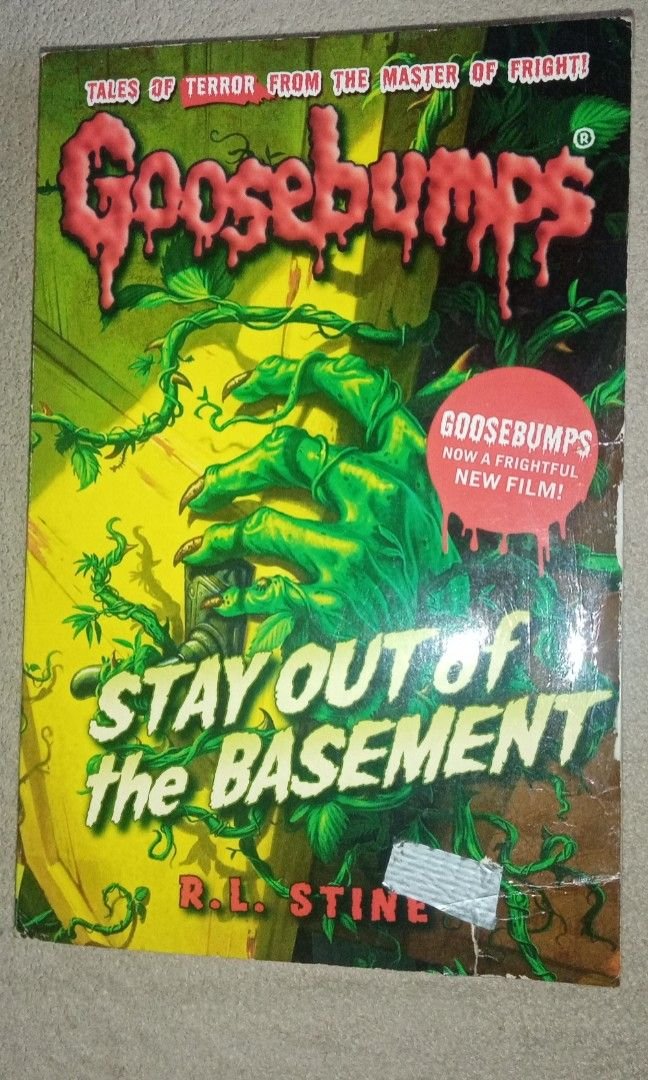
Long before streaming algorithms curated our every fright, a generation of young readers stumbled upon a literary phenomenon that shaped their understanding of fear, suspense, and the wonderfully bizarre. Few titles capture this formative experience quite like Goosebumps: Stay Out of the Basement. Its Cultural Impact & Legacy of Goosebumps: Stay Out of the Basement isn't just about a creepy story; it's about the first shivers, the shared whispers, and the lasting impression a book can leave on a developing mind.
R.L. Stine's third entry in the iconic Goosebumps series, Stay Out of the Basement, wasn't just another spooky tale. It was a masterclass in child-friendly horror, blending everyday family drama with bizarre, plant-based terror. This book solidified many of the series' hallmarks, defining what "Goosebumps" meant for millions and etching itself into the collective memory of a generation.
At a Glance: Why "Stay Out of the Basement" Still Thrills
- Early Series Prowess: Showcased R.L. Stine's original third-person narration and delightfully "deranged" plotlines before later stylistic shifts.
- Genre-Bending Horror: Expertly combined a classic "Scooby-Doo" mystery with genuinely intense, body-horror-lite elements, pushing boundaries for young readers.
- Relatable Premise: Tapped into universal childhood anxieties about parental secrets, scientific experiments gone wrong, and the mysteries lurking within one's own home.
- Memorable Adaptation: Its television episode amplified the book's thrills, creating iconic visual moments that stuck with viewers.
- Enduring Influence: Continues to resonate, inspiring new interpretations and serving as a touchstone for discussions about childhood horror and the broader Goosebumps phenomenon.
Unearthing the Roots: Why "Stay Out of the Basement" Still Haunts Us
Imagine a world where your dad, a brilliant botanist, starts acting… off. He’s spending all his time in the basement, forbidding you to enter, and then, he begins to resemble his experiments. This wasn't some far-fetched alien invasion or haunted house; this was your own home, your own father, subtly shifting into something monstrous. Stay Out of the Basement presented a terror that was disturbingly close to home, weaving a narrative that felt both fantastical and eerily possible to a young mind. Its genius lay in this domestic creepiness, making the familiar suddenly horrifying.
The story follows Margaret and Casey Brewer, whose father, Dr. Brewer, becomes increasingly obsessed with his plant experiments in the basement. As Ricardo Reading points out in a review, this premise is "a lot of classic Goosebumps fun," quickly spiraling into a "delightfully deranged" narrative where the kids "slashing at parents with knives!" and "plant people getting sliced in half with axes!" aren't just idle threats but real, shocking moments. This unexpected intensity is precisely what cemented the book's impact.
A Return to the Beginning: The Series' Early Prowess
Stay Out of the Basement holds a unique place in the Goosebumps canon as the third book ever published. This early position means it carries some distinct characteristics that set it apart from later entries. Crucially, it was written in the third person, a narrative style R.L. Stine would largely abandon in favor of first-person perspectives in subsequent books. As noted by the reviewer from Ricardo Reading, this early third-person approach allowed for a broader scope, potentially making for "much more effective storytelling" by providing a more detached, yet equally unsettling, view of the unfolding horror. It allowed readers to observe Margaret and Casey's growing dread from an omniscient distance, amplifying the suspense as their father’s transformation became increasingly undeniable.
Furthermore, these early books showcased a particular kind of narrative freedom. Stine hadn't yet settled into the more predictable patterns that some later books developed. Stay Out of the Basement is described as "delightfully deranged," a testament to its willingness to venture into truly bizarre territory without holding back. It felt like Stine was still discovering the full extent of his horrifying imagination, unbound by later expectations or formulaic constraints. This raw, unfiltered creativity is a significant part of R.L. Stine's unique writing style that resonates even today.
More Than Just Sprouts: The Book's Unexpected Intensity
While many Goosebumps stories flirted with danger and mild scares, Stay Out of the Basement genuinely pushed the envelope for its target audience. Beneath its seemingly straightforward "Scooby-Doo" premise of kids investigating a weird parent, lurked moments of surprising brutality and psychological discomfort. The idea of one's own father slowly morphing into a sentient plant, or even being replaced by one, touches upon profound anxieties about identity, family, and the grotesque. The book didn't shy away from unsettling imagery, delivering scenes of "green blood" and characters being held captive, sometimes dismissed with an unsettling casualness by other characters.
This level of intensity was crucial to the book's impact. It taught young readers that horror wasn't always about ghosts or monsters under the bed; sometimes, it could be found in the most mundane, trusted places. The visceral details, though tame by adult horror standards, were impactful enough to leave a lasting impression on children. It established that Goosebumps wasn't always going to pull its punches, giving the series a reputation for genuinely surprising twists and turns that kept readers coming back for more. This narrative fearlessness is a key element in classic childhood horror tropes that Goosebumps so masterfully employed.
The Craft of Childhood Chills: R.L. Stine's Masterclass
R.L. Stine wasn't just writing scary stories; he was crafting a particular experience for young readers. His genius lay in his ability to blend the outlandish with the relatable, creating scenarios that were terrifying but never truly traumatizing. Stay Out of the Basement perfectly exemplifies this balance. The fear is real – what if your parent isn't who they seem? – but the execution remains within the bounds of adventurous fun. It’s a delicate dance between genuine suspense and the reassuring knowledge that you’re still reading a Goosebumps book.
Stine also mastered the art of the cliffhanger and the misdirection, making every chapter a page-turner. He understood how to capitalize on the "what if" factor, taking everyday anxieties – a parent's strange hobby, a forbidden room – and twisting them into monstrous realities. This approach not only entertained but also subtly helped children explore and cope with their own anxieties in a safe, fictional space, something central to how Goosebumps navigated childhood fears.
The Relatability of the Brewer Kids' Predicament
What makes the horror in Stay Out of the Basement particularly potent is its grounding in a universal childhood experience: the bewildering actions of adults. Margaret and Casey aren't facing a supernatural entity from a dusty old mansion; they're trying to understand why their father, a figure of authority and comfort, is behaving so strangely. This immediate, familial context makes their fear incredibly relatable. Every child has experienced a moment where a parent seems mysterious, secretive, or just plain weird. Stine takes this common observation and escalates it to horrifying extremes, playing on the fundamental need for children to trust and understand their caregivers.
The children's investigation, their whispered theories, and their attempts to uncover the truth resonate deeply with the innate curiosity and occasional paranoia of young minds. They are, in essence, junior detectives trying to solve the most important mystery of their lives: the strange happenings within their own home. This relatable struggle is a cornerstone of the book's lasting appeal, making the bizarre plant-monsters feel less like abstract threats and more like insidious invaders into a child's safe world.
The "What If?" Factor: Everyday Fears Turned Monstrous
R.L. Stine's brilliance often lay in taking a mundane, everyday situation and injecting a horrifying "what if?" into it. In Stay Out of the Basement, the innocent act of a parent pursuing a hobby in their basement transforms into a nightmarish scenario. "What if your dad's gardening experiment created something truly evil?" "What if the plants in the basement were more intelligent and malevolent than you could imagine?" These questions tap into a primal fear of the unknown, of the hidden dangers lurking just beneath the surface of normalcy.
This technique is incredibly effective for young readers because it doesn't require a suspension of disbelief for something inherently supernatural. Instead, it asks them to imagine a slight, chilling tweak to their own reality. The basement, often a place of storage, forgotten treasures, or even mild apprehension, becomes a symbol of secrets and forbidden knowledge. Stine's masterful use of this "what if?" factor is a significant reason why the wider Goosebumps phenomenon captured the imaginations of so many, making the familiar suddenly unsettling. It trained a generation to look twice at the shadows and question the ordinary.
From Page to Screen: The Basement's Visual Legacy
The cultural impact of Stay Out of the Basement wasn't confined to the printed page. Like many of its series mates, the story received a memorable adaptation in the original Goosebumps television series, airing as the third episode in 1995. For a generation who might have read the book, seeing its unsettling premise brought to life on screen was a powerful experience, cementing its place in their memory. The TV show often took liberties, sometimes softening the edges, but in the case of Stay Out of the Basement, it arguably heightened the horror.
Ricardo Reading specifically recalls the television adaptation as "pretty memorable," noting that "the climax... was more impactful than the book’s." This speaks volumes about how visual storytelling can amplify a narrative. The sight of the plant-father, the eerie green glow, and the frantic attempts of Margaret and Casey to escape and expose the truth provided indelible images that transcended the text.
How Visual Mediums Amplified the Horror
The television adaptation of Stay Out of the Basement masterfully translated the book's unsettling atmosphere into a visually compelling experience. The limited special effects, rather than detracting, often added to the campy charm and genuine creepiness. The sight of Dr. Brewer's skin slowly turning green, the tendrils emerging from his clothes, and the eerie, glassy-eyed stare of the plant-clones were far more impactful when seen than merely imagined. The climax, with its dramatic reveal and the children's desperate struggle against their monstrous father figures, was particularly effective on screen. The frantic pacing and the visual depiction of the "green blood" and "plant people getting sliced" created a sense of urgency and danger that resonated deeply with young viewers.
This visual amplification was critical to the story's broader cultural reach. Those who might not have read the book were introduced to its chilling premise through the show, ensuring that the legend of Dr. Brewer's basement experiments spread even further. The episode became a cornerstone of the enduring legacy of Goosebumps TV adaptations, demonstrating how effectively Stine's stories could translate to another medium and intensify their scares.
The Enduring Echoes: "Stay Out of the Basement" in Modern Pop Culture
Even decades after its initial publication, Stay Out of the Basement continues to resonate. Its core themes of hidden dangers, identity confusion, and domestic horror are timeless. It’s not uncommon to hear adults who grew up with Goosebumps recall this particular title with a shiver, a testament to its staying power. The story serves as a benchmark for childhood horror, a foundational text that introduced many to the thrills of suspense and the chills of the uncanny.
The ongoing conversation around Goosebumps adaptations, including the 2023 Disney+ series, frequently references classic titles like Stay Out of the Basement. The Ricardo Reading review, for instance, muses on the new series potentially drawing inspiration from this very book, looking forward to a "darker, more mature take on these endearingly goofy stories." This demonstrates its continued relevance and the fertile ground it offers for reinterpretation. It’s a classic for a reason, its monstrous flora blooming anew in the imaginations of each generation.
Its Influence on Subsequent Children's Horror
Stay Out of the Basement didn't just entertain; it helped define a subgenre within children's literature: the domestic horror story. By placing the threat within the family home and making a parent the unwitting (or unwilling) antagonist, it opened doors for future creators to explore similar themes. It taught young authors and readers that genuine scares don't always need gothic castles or ancient curses; they can be found in the familiar, the trusted, and the seemingly safe. This intimate setting and personal threat model became a template, influencing stories that explore what happens when the people you love, or the places you feel safest, become the source of your greatest fears.
The specific fear of plant-based organisms or body horror, too, found a footing here. While not overtly gory, the transformation of Dr. Brewer and the existence of plant-clones introduced a generation to the disturbing concept of someone not being themselves. This subtly gruesome idea laid groundwork for other stories that explore identity, transformation, and the horror of the doppelgänger within the scope of children's literature, contributing significantly to the wider Goosebumps phenomenon.
Connection to the 2023 Disney+ Series – "Darker, More Mature Take"
The recent Disney+ Goosebumps series has brought the beloved franchise back into the spotlight, and discussions often turn to which classic stories might be re-imagined or influence new narratives. The reviewer at Ricardo Reading astutely observes that the new series seems to be "at least partly based" on Stay Out of the Basement, noting the first season's "darker, more mature take on these endearingly goofy stories." This speculation highlights the enduring adaptability and thematic richness of the original book. The concept of a parental figure undergoing a terrifying transformation, or the secret horrors hidden in an ordinary home, lends itself incredibly well to modern interpretations that can delve deeper into psychological tension and character complexity.
The promise of a "bonkers premise" receiving a more mature treatment is exciting, suggesting that the core elements of Stay Out of the Basement — its blend of scientific curiosity gone awry, familial dread, and body horror lite — continue to offer fertile ground for creators. This shows that the original story wasn't just a fleeting trend; it contained robust ideas that can be re-explored and re-contextualized for contemporary audiences, solidifying its place not just as a nostalgic memory, but as a continuously relevant piece of storytelling within the horror genre.
Beyond the Spooky: What "Stay Out of the Basement" Taught a Generation
While primarily a horror story, Stay Out of the Basement subtly imparted several lessons and anxieties upon its young readership. It wasn't just about jump scares; it was about navigating the confusing world of adults, questioning what you see, and understanding that not all mysteries have comforting explanations. It taught kids to look beneath the surface, both literally and figuratively, and to trust their instincts when something felt wrong.
It also served as an early introduction to complex horror tropes: body snatchers, scientific experiments gone awry, and the unsettling idea of an impostor in plain sight. These are sophisticated concepts for a children's book, presented in a digestible and thrilling way. It fostered critical thinking, asking readers to consider what they would do if their reality suddenly became unreliable.
Facing Parental Secrets and Unusual Behavior
One of the most potent elements of Stay Out of the Basement is its direct engagement with the unsettling experience of children encountering the strange or secretive behavior of their parents. For Margaret and Casey, their father's increasing oddity, his clandestine basement activities, and his insistence on privacy directly contradict the security and predictability that children typically expect from their caregivers. This narrative element taps into a universal childhood anxiety: the feeling that adults are inscrutable, possess hidden lives, or might even be keeping dangerous secrets.
The book, therefore, serves as a safe space for young readers to grapple with these anxieties. It implicitly encourages them to consider the boundaries between parental authority and personal safety, and to trust their instincts when something feels genuinely amiss, even if it involves someone they love. This exploration of the blurred lines of trust and suspicion within the family unit is a powerful, understated aspect of how Goosebumps navigated childhood fears, providing an early framework for understanding complex interpersonal dynamics through a horror lens.
The Blurred Lines Between Science and Horror
Stay Out of the Basement is a prime example of how Goosebumps frequently used scientific themes to generate horror. Dr. Brewer's plant experiments, initially presented as harmless botanical research, quickly cross into unethical and monstrous territory. This narrative warns against the dangers of unchecked scientific ambition, the hubris of playing God, and the unpredictable consequences of tampering with nature. It's a classic mad scientist trope, but localized and made palatable for a young audience.
For many readers, this book might have been their first encounter with the idea that science, meant to advance human understanding, could also create terrifying new threats. It blurred the lines between discovery and disaster, between beneficial innovation and terrifying mutation. This subtle critique of scientific overreach, wrapped in a thrilling package, adds intellectual depth to the story beyond its surface-level scares, hinting at the potential for familiar things to become alien and dangerous through misguided human intervention.
The Basement Door Remains Open: Why This Story Persists
The enduring Cultural Impact & Legacy of Goosebumps: Stay Out of the Basement lies in its perfect storm of unsettling elements. It was an early, daring entry in a groundbreaking series, combining relatable domestic drama with genuinely bizarre and intense horror. It gave a generation vivid, shared memories, from the unsettling plant-father to the shocking green blood.
This wasn't just a book; it was an invitation into the world of horror, a gateway drug to scares that shaped sensibilities and sparked imaginations. Its premise still holds up, still feels fresh, and still has the power to make you think twice about what might be growing in your own basement. So, next time you hear a strange rustling from downstairs, or notice a peculiar look in someone's eye, remember Margaret and Casey Brewer. And perhaps, for good measure, just stay out of the basement.
For those eager to dive deeper into the world of Stine's subterranean scares and other hidden terrors, be sure to explore Your guide to Goosebumps basements. It's a treasure trove of information for anyone who ever dared to venture into the unknown.
Cultivating Your Own Goosebumps Legacy
The journey through Goosebumps: Stay Out of the Basement offers more than just nostalgic thrills; it provides a blueprint for understanding what makes horror resonate. If you're looking to introduce the genre to younger readers, or simply revisit a foundational text, this book remains a masterclass. Consider how its elements—the slow build of dread, the familiar setting turning uncanny, the relatable protagonists—can be discussed or re-experienced. Share your own memories of reading it, or watch the television adaptation with new eyes, paying attention to how its "more impactful climax" was achieved. By engaging with these stories, you not only honor their legacy but also keep the spirit of childhood horror alive, ensuring that the chills of Dr. Brewer's basement continue to sprout for generations to come.